Your best support worker might be writing your worst notes
5 October 2026 · Andy Massey, Head of Partnerships
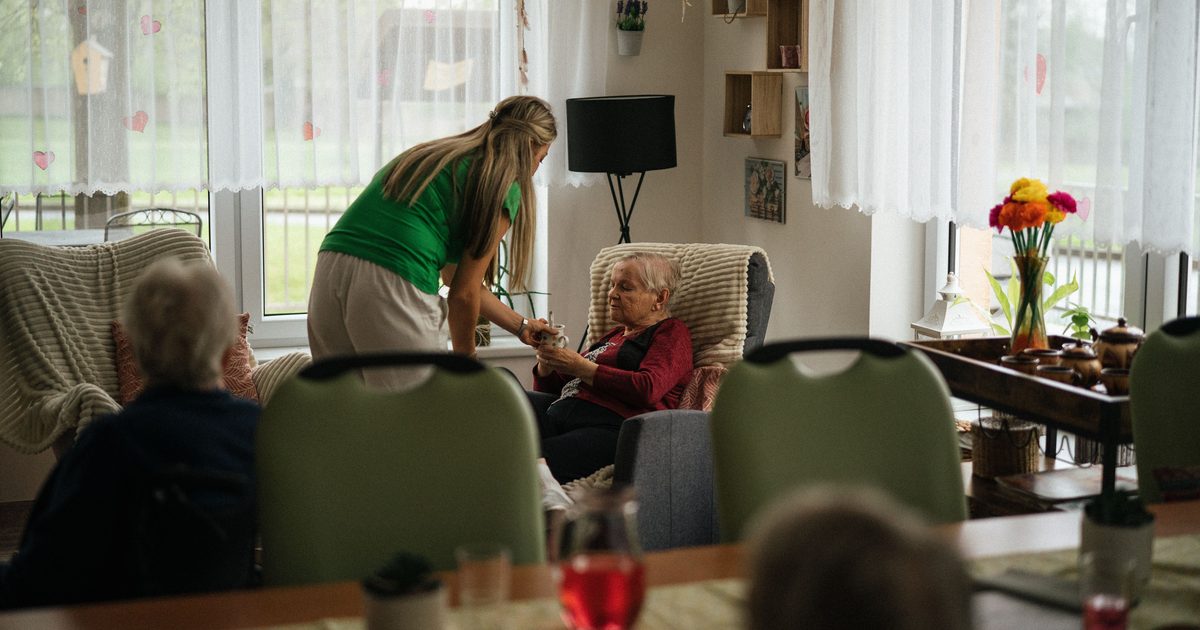
Every registered manager I speak to knows this person.
They're the one residents ask for by name. They notice when someone hasn't touched their breakfast. They're calm in a crisis, and the shift feels different when they're on it.
Then you open their notes. "Supported X with personal care. X had a good day. No concerns."
It isn't that they don't care. Their notes are thin for all sorts of reasons. English might be their second or third language. They might be dyslexic. They might have just finished a twelve-hour shift and have a bus to catch.
Caring for someone and writing about it are two different skills. Our systems only measure one of them.
The record judges the writer, not the care
Here's what bothers me about that.
The daily record is the only part of the care that leaves the room. Inspectors read it. Commissioners read it. Families sometimes read it. Increasingly, it's legal evidence too: I wrote in August about how the courts now read daily notes when deciding questions of liberty.
So when a brilliant worker writes a thin note, the outside world sees a thin service. The care was excellent. The evidence says otherwise.
And the reverse happens too. A fluent writer can make an ordinary shift sound exceptional. We've built a sector where writing ability quietly stands in for quality of care.
This is a workforce issue now, not a niche one
The sector depends on people who learned English as adults.
Skills for Care's latest figures show posts filled by British nationals have fallen by 130,000 since 2020-21. International recruitment has filled much of the gap. And with overseas recruitment now falling sharply (30,000 in 2025-26, down from 105,000 two years earlier), keeping the people already here matters more than ever.
We ask these colleagues to produce detailed written records, often to a standard many of us would struggle with in a second language. Then we wonder why recording feels like the worst part of the job.
What happens instead
When the tools don't fit the person, people find workarounds. You'll probably recognise some of these:
- The rewrite. A senior or manager quietly rewrites notes after the shift. It's kind, and it's a huge hidden cost.
- The forty-minute note. The worker gets it right, eventually, at the cost of their evening.
- The minimum. They stop writing anything that isn't an incident, because every sentence is effort.
- The personal phone. Some quietly paste notes into a free translation app or chatbot. The intention is good. The data protection position isn't.
None of these is a training problem. They're a tooling problem.
Voice levels the field
Almost everyone can explain a shift out loud far better than they can write it. That's how handovers have always worked.
So in Leafnotes, the support worker speaks. They describe the day the way they'd tell a colleague, accent, slang and all. Lola, the AI we built in-house, turns that into a clear, professional record in the right categories.
The worker then reads it back and signs it off. That step matters, and I'll come back to it.
The result is that the note reflects what the worker actually knows, not how confidently they type. The person who notices everything finally has a record that shows it.
"Isn't the AI putting words in their mouth?"
It's the right question, and every DPO and manager should ask it.
The record has to stay the worker's account. Lola structures and writes it up; it doesn't invent what happened. Nothing counts until the worker checks it and declares it accurate. Once submitted, a record can only change by addendum, and the original transcript is kept for audit.
There's a second benefit people don't expect. Real-time training tips show the worker what a strong note looks like, set to your organisation's own standard. Over time, they're not being corrected. They're being coached.
Who gets promoted?
One last thought, and it's the one I care most about.
In a lot of services, the route to senior or team leader runs through paperwork. If your writing is weak, you stay where you are, however good your care is.
Take the writing barrier away and you may find your next team leader has been on your rota all along. As Louis put it in his recent post, where you start isn't a verdict.
Try this
- Make two lists. Write down your five best carers, then your five best note-writers. If they're not mostly the same people, your records are measuring the wrong thing.
- Ask the honest question. Ask your team, without judgement, whether anyone uses their own apps to help with notes. You may not like the answer, but you need it.
Our mission is that the proving shouldn't cost you the caring. For a lot of brilliant people, at the moment, it does.
Andy Massey is Head of Partnerships at Leaf AI, the company behind Leafnotes. If you'd like to see what your team's notes could look like, he's at andy@lolabyleaf.com.